Press Reports
|
A Letter from Cambodia
2020-12-24
|
|
|---|---|
|
Dear family of the Incorporated Association 'Marianne and Margaret'
Among all the affected areas, 'Poipet,' where I am stationed, is a border city where poor people who have drifted from place to place — hoping to scrape by on day labor by crossing the border — gather from all over the country as a last resort. Modern conveniences exist here only in patches; the gap between rich and poor is extreme, and prices are so high that there are many things the vast majority of ordinary people cannot even dream of. It feels like a distorted blend of Korea from 100 years ago, Korea during its economic growth period 50 years ago, and Korea today, all mixed together. On the very day I arrived and visited students' homes to deliver relief supplies, my heart felt so heavy that I came back and cried for a long time. What is it that drives these people into this kind of life? In truth, we who share this world with them probably know all too well. That this is not only their problem — but ultimately, ours as well.
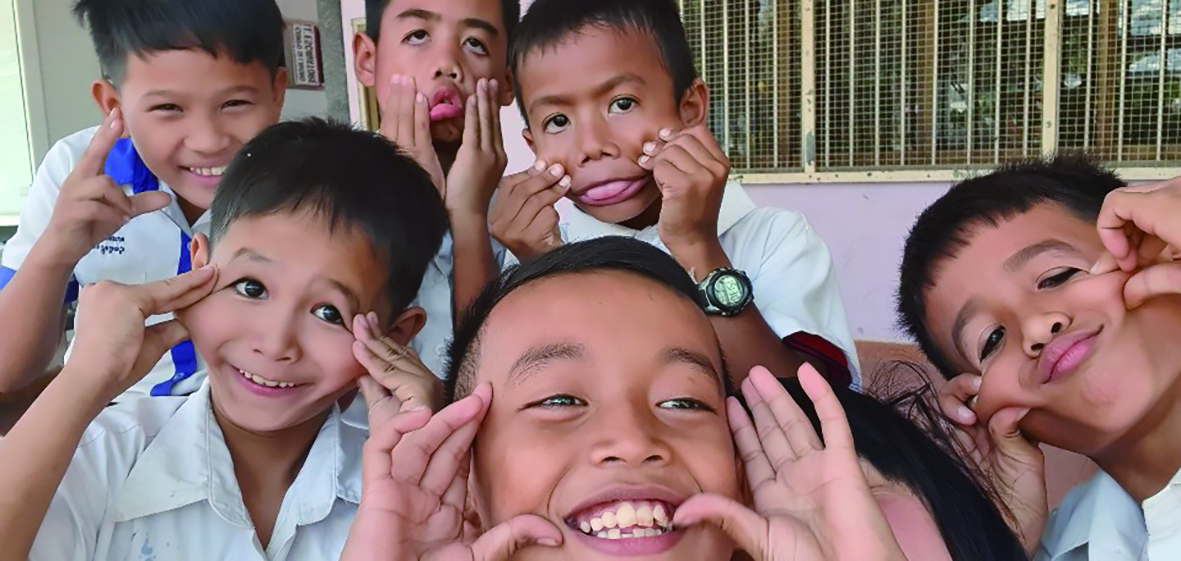
Even the more conscientious households, and the school here, without exception burn their plastic, vinyl, and all manner of household waste day after day — and at those times, you must endure the toxic smoke and smell that hangs thick in the air, enough to give you a headache for hours. Brushing your teeth by collecting rainwater, filtering it, and carrying it over has become just another part of daily life, and running water is simply beyond imagination. Whenever it rains, all the household wastewater and sewage — except on the main central road — pools on the streets like small lakes, and it is often the case that even cars get stuck in the mud. Riding a motorbike through that water has become routine. Today as well, I rode my motorbike along a road flooded with water to a large store thirty minutes away. I hauled back snacks for 75 people, heavy as rocks, and in the Sunday afternoon as the children were resting, I called out their names, met their eyes, and handed out the snacks — and the children lit up with smiles and greeted me with thank-yous. What the children received was about one dollar's worth of food per person — one small apple, which many had never been able to eat before, and two coconut biscuits. The apple I had made up my mind to buy turned out to be especially delicious, the children all said in unison — and among those happy children, many had never had a whole apple to themselves.
It is like a small movement that takes a long time to bear fruit, but through education it cheers on and nurtures the future of Cambodia. The children who have come into this school enjoy a somewhat better life — they study, play with friends, eat three meals a day, and find joy.
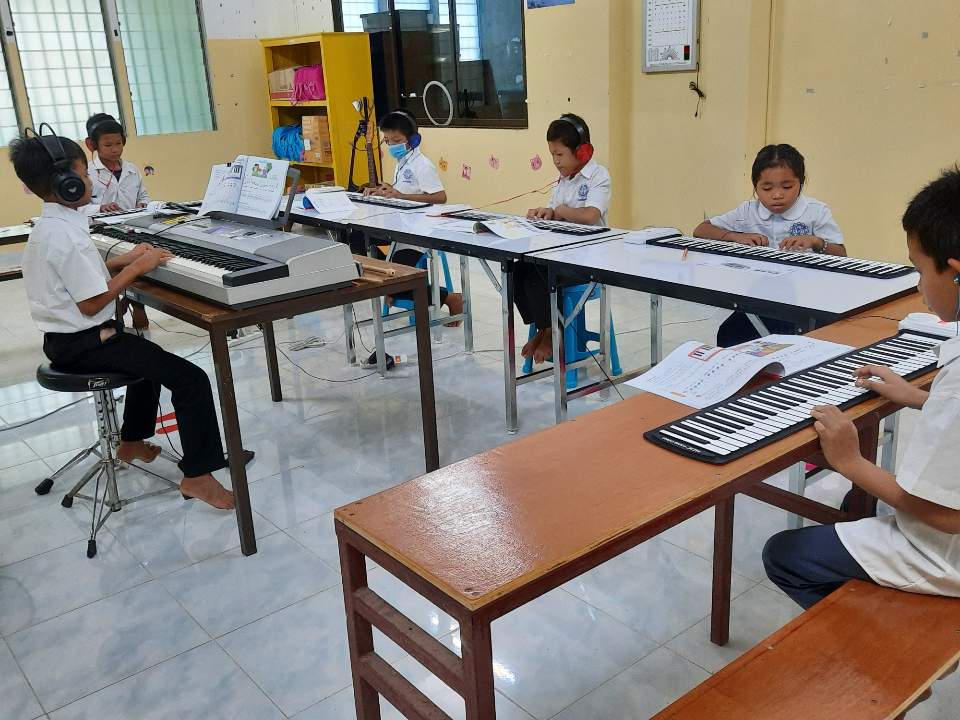
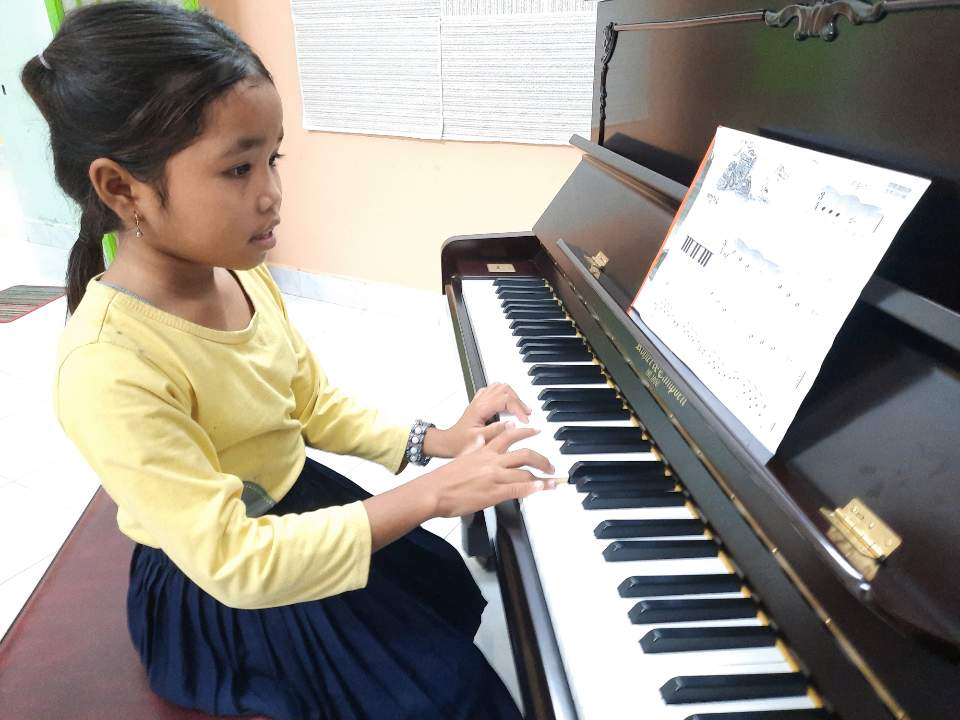
Finding teachers for general subjects is already extremely difficult, but finding teachers for the arts — music, fine arts — is something most schools do not even consider possible. Currently deployed for holistic education and teacher development at 'Don Bosco School,' I conduct daily lessons Monday through Saturday with students who are seeing a piano for the very first time in their lives: individual piano performance and theory lessons, group electronic piano performance and theory lessons, handchime choir lessons, choral lessons, and Korean language lessons. I have founded the Don Bosco School (DBS) Choir and am building an ensemble — but none of the students can hear a pitch and match it with their voice, let alone read basic sheet music or know the musical scale; they simply sing along however they feel like it. Sometimes we sing hymns during Mass, and it sounds so unusual that even as we sing, we end up giggling together. Our Don Bosco School choir's greatest goal by this Christmas is to perform the hymn 'Silent Night' as a special piece in two-part harmony. For children who have only ever hummed freely in unison by ear, moving from key to key, using a hymnal with only lyrics and no sheet music — singing in two-part harmony is in itself an entirely new challenge and a completely new world.
Yet watching the students respond, little by little and slowly, to something new, and feeling the Holy Spirit working tirelessly within us through music education, the day's fatigue, the inconveniences of daily life, and the cultural shocks all quietly fade away — and I end each day with pride in the children, boundless gratitude for all of this, and excitement for tomorrow.
|